

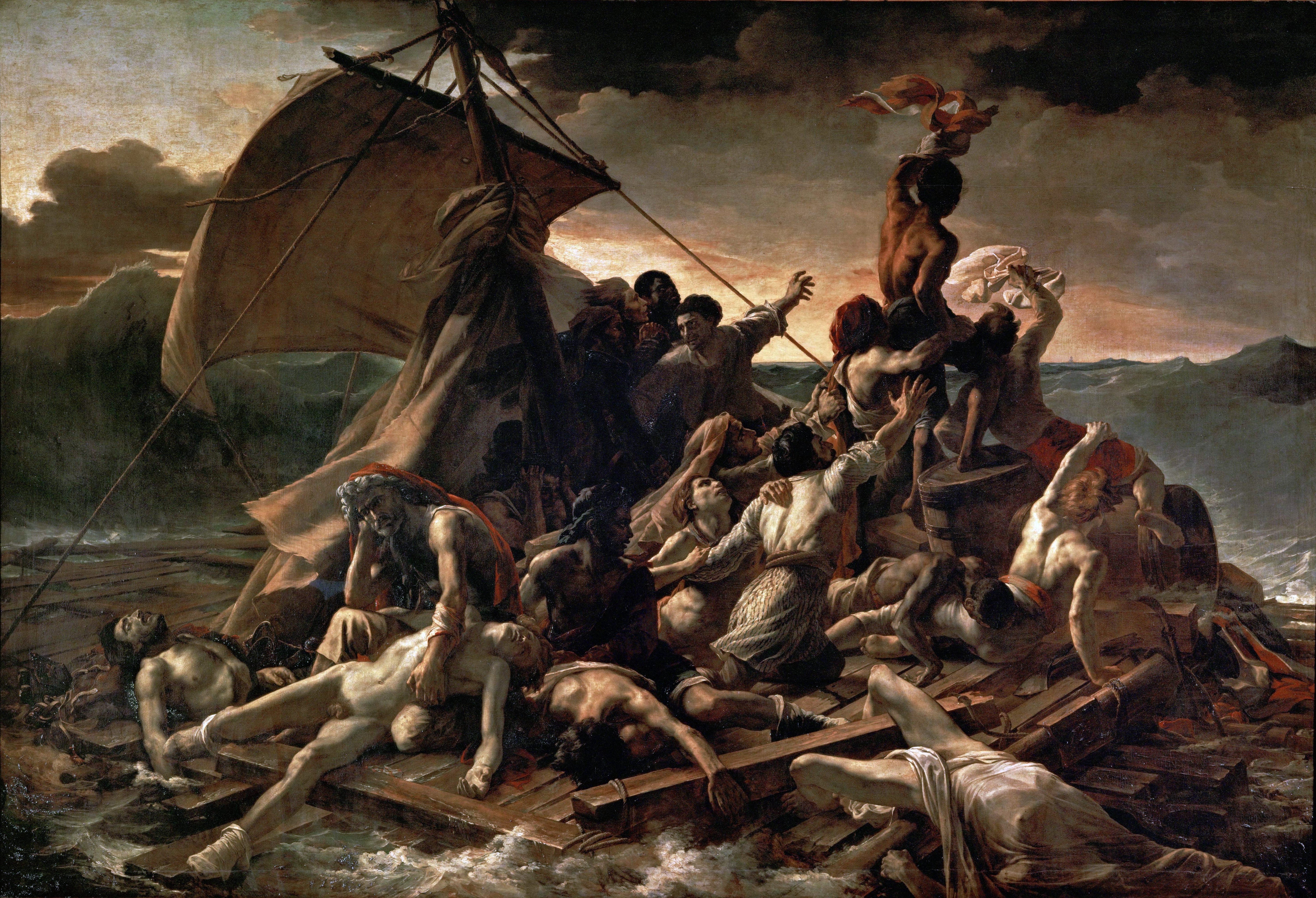
The test of any morality: Ten people. Five seats.
Who do you throw overboard?
7 INSIGHTS
I.
What is morality? What does it mean to be moral?
Is it objective or subjective? Is it about intentions or results? Does it come from a higher power, or is it something we create? Is it about following rules or knowing when to break them?
II.
You’re walking along and see a man kill another man.
Was this moral?
You can’t say. The killer could be a mass shooter or the hero who just stopped a mass shooter.
Morality isn’t in the behavior. It’s in the context and what it means.
III.
This is where rigid moral rules fail us immediately.
They don’t account for context. So they require exceptions. And a rule that requires exceptions is a walking contradiction.
IV.
If morality is objective, built into the fabric of reality like gravity, we still face a problem: How do we access it?
Through a higher power?
Is something moral because God commands it, or does God command it because it’s moral?
If the first, morality is arbitrary. If the second, morality exists independent of God and we’re back to square one.
Through reason?
Then why do rational people disagree? Why do moral "truths" shift across centuries and cultures?
V.
If morality is subjective—if everyone gets to pick and choose—then how can we say morality is a thing at all?
It becomes preference. And you can’t say someone is wrong, only that you disagree.
VI.
If morality is about intentions, then what about the Crusaders?
They killed in the name of God, peace, and love—fully convinced of their righteousness.
If morality is about results or even a notion like “increas well being'“, explain Thomas Midgley, the celebrated inventor who made modern life possible. Decades later, we discovered he’d poisoned a generation (leaded gas) and torn a hole in the sky (Freon).
Whether something is moral should not depend on when the question is asked.
VII.
If morality is about being virtuous, who decides what virtue is? The virtuous Nazi believed he was cultivating strength and loyalty.
VIII.
There are ten individuals crammed into a lifeboat designed to hold five.
Who stays? Who do you throw overboard?
No rule answers this in advance. No formula. No abstract principle.
But in that moment, with those people, a decision is possible. You see who serves life and who doesn’t. You choose.
Morality can’t be calculated ahead of time. It has to be lived—alive to the situation, responsive to what’s real.
That’s why every rigid framework fails. They try to answer from outside the boat.
Real morality answers from within it.
4 QUOTES
I.
“The road to hell is paved with good intentions.”
Proverb
II.
“Morality is the herd-instinct in the individual.”
Friedrich Nietzsche
III.
“The greatest crimes in the world are not committed by people breaking the rules but by people following the rules.”
Banksy
IV.
“Beware of the man who works hard to learn something, learns it, and finds himself no wiser than before.”
Kurt Vonnegut
1 QUESTION
Ten people on a lifeboat that holds five. Who stays? Who drowns?